On Creativity and Artistic Expression: A Path to Inspiration
Hi! Welcome to this journey on Creativity.
Today I want to talk to you about something I am deeply passionate about: creativity and artistic expression. If you’re here, you probably feel that creative spark inside you, that desire to express yourself in some way, whether it’s through music, painting, writing, or any other art form. Well, I would like to invite you to explore together this path to you and inspiration.
Throughout this article, we will discuss how to find that spark of inspiration, how to overcome those blocks that hold us back, and how to let creativity flow freely in our lives. I’m also going to share with you some quotes from amazing artists, such as Julia Cameron and Elizabeth Gilbert, who have been a constant source of inspiration for me. Let’s dive in!

Inspiration from Great Voices
I have always found a lot of comfort and motivation in the words of other artists when I have felt alone and misunderstood. It is as if, in those moments of doubt and vulnerability, their voices are a kind of guide that reminds me that I am not alone in this creative journey, that others have walked similar paths before me.
Julia Cameron, author of *The Artist’s Way*, says something that resonates deeply with me: “Creativity is nature expressing itself through us.” This idea has given me so much relief in those moments when I feel inspiration eludes me. It reminds me that creativity is not something we have to force or manufacture; it is something natural, something that flows through us if we simply give it space to do so. It is like a river that is always there, and our job is simply to allow it to flow, without blocking it with our doubts or fears. How nice, isn’t it?
And then there’s Elizabeth Gilbert, who in her book *Big Magic* offers us another wonderful perspective: “Inspiration is like an unexpected visitor who shows up when you least expect it.” I love this quote because it perfectly describes that unexpected magic of creativity. Sometimes, inspiration comes when we are more relaxed, in those moments when we are not actively looking for it. It is unpredictable, yes, but it is also exciting to know that it can appear at any moment, transforming something ordinary into extraordinary.
These ideas have accompanied me throughout my artistic journey. They have taught me to trust the process, to be patient and to be open to the possibility that creativity can manifest itself in ways I would never have imagined. Every time I read those words, I feel as if they give me permission to let go of control and simply enjoy the creative flow, with all its surprises and wonders. I’d love it if you could feel the same way!
2. Creativity as a Natural Process
2.1. “We Are All Creators”
I want you to think about something: creativity is not only for those who call themselves “artists”. We are all creators, in every little decision and in everything we do. Julia Cameron tells us that we all have the ability to create, because creativity is natural, it is part of who we are. It doesn’t matter if you have never played an instrument or if you don’t consider yourself “creative”, as children we were always creative, it was natural and this proves that we all have an artist inside.
2.2. Inspiration Is Everywhere
Inspiration is everywhere waiting for us to find it, although sometimes it may seem random, the more we look for it and give it space in our lives, the more natural it will be to reach it. And it can come from anywhere: a conversation, a walk in the park, a song you hear for the first time. Author Elizabeth Gilbert describes it very well in *Big Magic* when she says that inspiration is like an unexpected visitor. And sometimes, the best we can do is to be ready to receive it when it appears, even if it is at the most unexpected times. By the way, do you remember that the Greeks talked about the Muses?
2.3 The Muses: The Divine Inspiration
In Greek mythology, the Muses were nine sister goddesses, daughters of Zeus and Mnemosine, the goddess of memory. Each of these Muses presided over a particular aspect of the arts and sciences, from epic poetry to music and dance. For example, Clio was the muse of history, Euterpe of music, and Calliope of epic poetry. When a poet or artist invoked a Muse, he was literally asking for her favor and guidance to inspire his work. It was a recognition that creativity did not arise from human effort alone, but from a higher force driving them.
Other Cultures and Divine Inspiration
It was not only the Greeks who personified inspiration. In ancient Rome, for example, the “Genius” was a protective spirit that was believed to guide each person and help them in their creative and vital endeavors. This “Genius” was seen as an external force that could be worshipped and summoned for support.
In the Norse tradition, the “Æsir” were gods associated with creation, and were believed to grant inspiration to poets and skalds (Scandinavian poets). In addition, the Celts spoke of “Awen”, a Welsh word meaning flowing inspiration, a kind of divine illumination that manifested itself in poets and bards.
A Famous Anecdote: The Inspiration of Homer
One of the best-known anecdotes about divine inspiration in Greek culture is related to Homer, the legendary poet who is said to have written *The Iliad* and *The Odyssey*. According to tradition, before beginning his works, Homer invoked the Muses to grant him the necessary inspiration. At the beginning of *The Iliad*, for example, he begins with an invocation to the Muse: “Sing, O Muse, the wrath of the Pelid Achilles…”. This opening not only establishes the epic tone of the work, but also acknowledges that the story he is about to develop does not come from him alone, but from a divine source.
Inspiration Today
Although today we don’t often invoke the Muses as the ancients did, the idea that inspiration comes from an external source lives on in many forms. Some speak of “intuition”, others of “innate creativity”, but in essence, all these concepts connect to the same idea: that inspiration is a gift, something that is given to us and that we should respect and cultivate.
This ancient concept of the Muse, the “Genius” or the “Awen”, reminds us that creativity is something bigger than ourselves. It is a force that, when we recognize it and open ourselves to it, can take us to surprising places.
2.4. How to Cultivate a Creative or Inspired Mind:
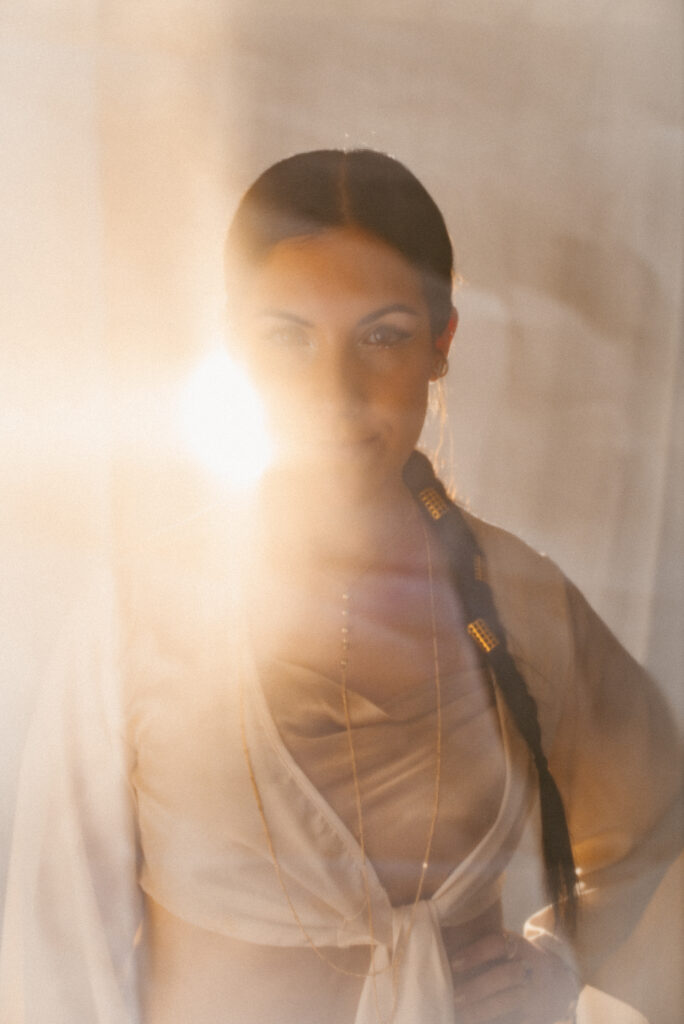
To keep creativity alive, we need to cultivate an open and receptive mind at all times (whether calling on the muses or not). For me, for example, I love to look for inspiration in the everyday, sometimes a simple ray of sunlight coming through the window can trigger a phrase that becomes a melody or vice versa. The trick is to be attentive and open to these small daily wonders, to be open to see with eyes of surprise and magic. And seek to surround yourself with things that inspire you, such as pieces of art that enchant you, strange objects, music that provokes sensations or even just observing the beauty of nature!
Cultivate a curious eye and discover how everything around you can spark your creativity.
Overcoming Creative Blocks
3.1. “The Enemy of Creativity is Fear.”
Fear… that old enemy of creativity. Elizabeth Gilbert has a quote that I love: “Perfection is just fear in disguise.” And it’s true, how many times have we not stopped because we don’t feel good enough or because we fear failure? (Raise hand)
But the key is to move forward, to decide that you are bigger than your fear, to turn your back on fear and create anyway, to jump into the pool, without prejudice, without expectations, just for the experience, knowing that you will come out stronger and prouder of yourself after trying. Creativity flourishes when we give ourselves permission to make mistakes and learn.
3.2. The Importance of Play and Experimentation
Sometimes we forget that creativity is also play. We take everything so seriously that we stop experimenting and having fun. But art is freedom, it is fun, it should always feel that way!
Cameron reminds us that “It’s safe to be creative. It’s safe to grow.” So, play! Experiment with new ideas, try things you’ve never done before. There are no rules, just enjoy the process. There is nothing for you to lose in the process, only to gain.
3.3. The Power of “Morning Pages”.
Have you heard of “Morning Pages”? This is a wonderful exercise by author Julia Cameron. It’s about writing three pages every morning, without a filter, just letting the words flow. It is like a cleansing for the mind, releasing blockages and allowing creativity to flow. For me, it has been an incredible tool to clarify my thoughts and open up to new ideas. I recommend it.

4. Artistic Expression as an Act of Courage
4.1. “Creativity Requires Courage”.
Expressing oneself through art is a courageous act. Showing the world who you really are, through your music, your writing or your painting, takes a lot of courage. Gilbert puts it bluntly, “Creativity lives in the brave.” Every time you share your art, you’re showing a part of you, and that’s powerful.
4.2. Finding Your Authentic Voice
There is nothing more liberating than finding and embracing your authentic voice. That voice that is unique, that belongs only to you, that no one else has, no matter what others think or say, being true to yourself and your heart. But how do we find it?
I think the answer is so simple that we don’t believe it. The answer is:
Looking for it, yes, that’s right. We find our authentic voice by searching for it, experimenting, creating, making mistakes, falling down again and again, now happy, now not so happy, now we get back up again, etc…
Along the way we learn about ourselves and find what makes us authentic, our truth in our artistic expression, and suddenly we find ourselves with deeper and more meaningful creations.
4.3. The Magic of Sharing your Art
Sharing your art with the world can be scary, but it’s also one of the most rewarding things you can do. You don’t know who you could inspire, who you could touch with your music or your art. Julia Cameron tells us that “Art is not a luxury, it is a necessity.” So don’t keep it to yourself, always share it, even if you are ashamed or afraid, even if it is with your close people…let your magic reach others, you never know who you might inspire.
5. Connecting with your Inner Creativity
5.1. Practicing Gratitude and Presence
Gratitude and being present in the moment can open incredible doors for creativity. When we are grateful for what we have and focus on the now, our mind opens to new possibilities. One little exercise I like to do is to write down a list of things I am grateful for each day. It’s a simple way to stay connected to my creativity and open myself to see the everyday with new eyes.
5.2. Surround yourself with Beauty and Art
Creating an environment that inspires you is key to keeping creativity alive. Whether it’s a corner in your home filled with things you love, or spending time in nature, surrounding yourself with beauty feeds your creative spirit. Do you have an area of your home that inspires you? How could you bring more beauty or inspiration into your home? Is there a place in nature that you go to often that fills you with ideas?
5.3. Letting You Dream Big
Finally, never stop dreaming big. Don’t put limits to your creativity. Elizabeth Gilbert reminds us that “Creativity is a gift you give yourself.” So dream, create, and let your imagination fly as high as you can.
6. The Creative Journey
We talked about many things, from inspiration to creative blocks to the importance of play and courage. All this to remind you that creativity is a powerful tool in our lives, something we can all cultivate and enjoy.
I invite you to continue exploring your creativity. Use the tools and tips we’ve shared here, and never stop looking for new ways to express yourself. This creative path is one that has no end, and each step you take brings you closer to your authentic self, the one who is not afraid to show himself or herself as he or she is and express everything he or she has inside. A road worth traveling.
In closing, I want to leave you with one last quote that I hope inspires you as much as it does me: “You have the right to create and, more importantly, you have the power to do so.” So, go ahead, keep creating, keep dreaming and never stop expressing yourself.
Tell me, how will you cultivate creativity in your life? What has inspired you the most?
I send you a hug,
Julia.